Let’s be honest — fixed matches exist. They’ve always existed, and they’re likely happening somewhere in the world right now. But if you think the guy on Instagram or Telegram running ads about “100% fixed games” is your gateway to wealth, then you’re setting yourself up to be scammed.
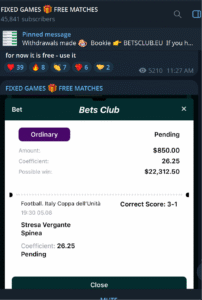
Now, I’m not saying this to crush anyone’s dreams or sound like a saint. I’m a punter myself. I’ve seen it all — the real, the fake, and the ridiculous. So, this is not a theory. It’s my opinion based on years of observation and research.
Real Fixes, Real Scandals
Let’s take a step back into history for some perspective. In 2013, Europol (that’s Europe’s criminal intelligence agency) uncovered a massive match-fixing scandal that shook the football world. They revealed that over 680 matches, including Champions League games and World Cup qualifiers, were suspected of being manipulated. Arrests were made, players and officials were questioned, and it was clear: fixing games isn’t just a fantasy — it happens at high levels.
Even more famous is the Juventus scandal in Italy — known as Calciopoli. Back in 2006, Juventus, one of the biggest clubs in the world, was found guilty of being involved in match-fixing through influencing referee selections. The punishment? Relegation to Serie B, stripping of titles, and bans for key figures. That wasn’t gossip — that was real, and it changed Italian football forever.
So yes, fixed matches are not a myth. They happen. They’re organised by underground networks involving players, referees, and sometimes even club officials. But — and here’s the important part — you won’t find them on social media.
If It’s Real, Why Would They Sell It to You?
Let’s think logically. If a group of people actually had access to a fixed match, why would they advertise it on Instagram or Facebook with flashy graphics and fake testimonials? Why would they be begging random strangers in DMs to “invest” in a sure win?
Simple answer: they wouldn’t.
People who are truly involved in match-fixing — whether at lower leagues or more organised levels — are extremely discreet. They keep it tight, private, and usually within trusted circles. Sharing it widely would risk the entire operation. You don’t protect something that valuable by handing it to random people online for ₦10,000 or ₦20,000.
Most “Fixed Games” Online Are Scams
This is the hard truth many punters don’t want to hear. The majority of these so-called “fixed matches” advertised on Telegram, WhatsApp, or Instagram are nothing more than scams.
They prey on desperate punters — those who’ve lost a lot and are hoping for a miracle. These scammers know the psychology: they promise high odds, big payouts, and “VIP inside info.” Once you pay, they either ghost you, send fake results, or worse — keep leading you on with lies.
Some are smart. They’ll give you one “free game” that wins, then ask you to pay for the next one. But it’s all part of the scam cycle. There’s no real source, no real fix — just manipulation.
What You Should Believe
So, to answer the big question: Are fixed matches real? Yes. But are they accessible to the average punter through Telegram ads or online sellers? Absolutely not. No matter what a person says, don’t get involved with fixed matches on social media.
If you’re serious about betting, focus on building your skill, managing your money, and understanding that wins and losses are part of the game. Chasing after “sure odds” or “fixed games” sold online will only leave you broke and frustrated.
Final Thoughts
In my opinion, fixed matches do exist — but you and I are not invited to that table. The people running those deals aren’t advertising it, and they’re definitely not selling it to strangers for peanuts on social media.
So the next time you see a post claiming “100% sure game” or “correct score fixed,” scroll past. Don’t lose your hard-earned money chasing shadows. If you want to win consistently, work on your strategy, patience, and discipline. That’s the real fix.